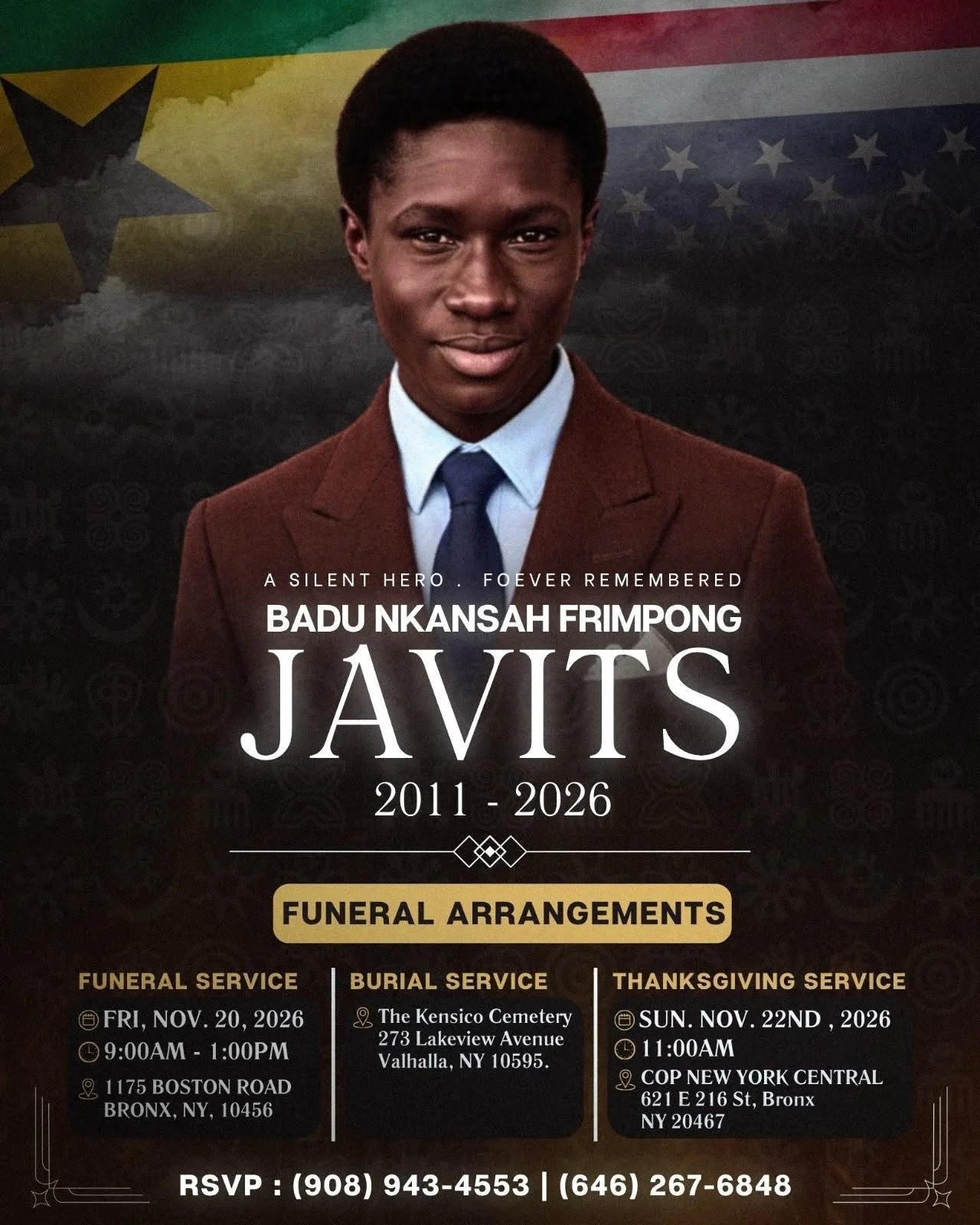
Inside a Cage We Didn't Build: What the Javits Frimpong Case Reveals About Caste, Assimilation, and Parenting
The Javits Frimpong case, and the recent revelations surrounding it, exposes the deepest fault lines in America’s tried-and-true, still-existing caste system. Because of that system, every single incident, every single victim, and every single suspect is immediately typecast into a racist schema that places Black people on the bottom rung of a hierarchy intentionally designed to keep us there.
The caste system makes the narrative easy when a white assailant harms a Black victim, or when tragedy neatly fits a familiar racial binary. It becomes far more menacing when both the victim and the accused share the same skin. Suddenly, the familiar tropes of "Black-on-Black crime" ring out, weaponizing intra-communal tragedy to reinforce the very hierarchy that fuels the fire in the first place. Notice how we never hear about "white-on-white crime," even though proximity dictates that most crime happens within one's own community. The dominant caste is granted the grace of individual humanity, while Black tragedy is flattened into a collective indictment.
That is the unfortunate reason so many rushed to decode a still-developing case and defaulted to a divisive script: an innocent Black immigrant child must have been victimized by a maleficent Black American child. While many of those reactions stemmed from real, lived experiences, there is far more nuance here than that binary allows. When we talk about the institutions that failed Javits, I pray our leaders and our community are ready not just to talk about, but to dismantle, the systems that failed the young people who killed him, too.
Yet we also have to tell an uncomfortable truth about the first system a child ever knows: the home. Parents have one of the hardest jobs in the world, especially in an era where social media and technology have pushed so much of a young person's universe into the dark corners of whatever app is trending next. Sometimes those corners are dark because an immigrant family is navigating unfamiliar terrain. Often, African immigrant parents fall into the trap of believing the American system will handle the rest. There is a quiet assumption that if you pick the right school, pay good money for education, provide access, and put nice clothes on their backs, all will be well because after all, this is America. Other times, those corners are hidden behind the natural walls teenagers build as they learn to conceal what they are truly going through. Regardless, parents cannot afford to outsource vigilance or assume that institutions, zip codes, or the streets will raise our children responsibly. Whether it is a white teenager using a gun his parents bought him to commit a mass shooting, or a West African teen caught up in the fatal beating of Javits, the mandate is the same—whether this is your first year in America or your sixth generation. Parents must intentionally step into those closed-off spaces, uncover what is happening in the dark, and actively guide their children before the outside world claims them.
Whether our elders arrived here chasing a dream they viewed as the ultimate blessing, or were brought here in chains and spent generations passing down survival tactics for a country they never chose, the trap remains the same. Both legacies leave our children navigating a caste system built to devalue them. One group often unprepared for the depth of American anti-Blackness, and the other exhausted by centuries of enduring it.
Until we pair fierce, present parenting with a refusal to turn on one another, we will keep fighting each other inside a cage we didn't build.
May Javits Frimpong Rest in Peace 🤍